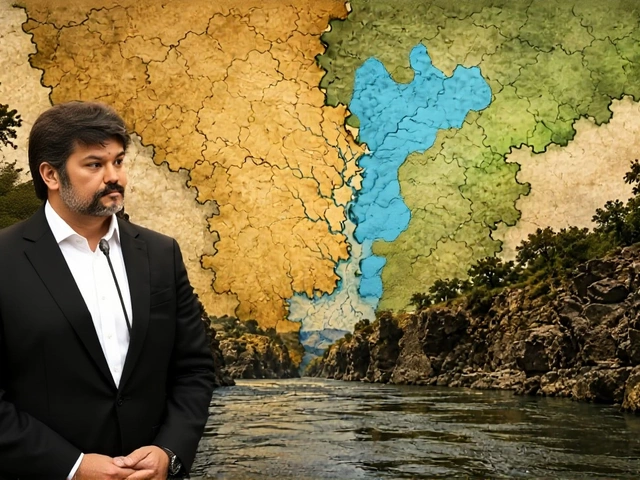
It’s not often a new chief minister walks into office and immediately hands out cash for calling out his own staff. But that’s exactly what C Joseph Vijay, the newly sworn-in Chief Minister of Tamil Nadu, has done. Within days of taking the oath in Chennai, he unveiled a bold policy: report a bribe demand of just ₹1,000, get ₹1 lakh as a reward.
The move is part of a broader transparency push aimed at tackling a state debt burden exceeding ₹10 lakh crore. It’s a high-stakes gamble to reset public trust, but it also puts Vijay under immediate scrutiny. The twist? His first major test isn’t just about catching petty bureaucrats—it’s about whether he’ll prosecute powerful figures from the previous administration.
A Personal Pledge Against Public Funds
Right after the swearing-in ceremony on Sunday, Vijay didn’t mince words. He framed his tenure as a "new beginning" and a "new era of real secular social justice." But the headline-grabbing moment was his personal vow regarding public money.
"I will not touch even a single paisa of public money. I do not need it," he declared. It’s a striking statement for a politician, essentially saying his integrity doesn’t require financial incentives from the treasury. He followed this with a direct warning to civil servants: if you’re planning to misuse your power, "erase that thought right now."
To back up these words, he promised an immediate white paper detailing the exact financial condition of the government. Transparency, he argued, is the only way to manage the massive fiscal deficit inherited by his administration.
The ₹1 Lakh Whistleblower Scheme
Here’s the thing: promises are cheap without enforcement mechanisms. That’s why Vijay’s team moved fast. According to reports from NTV Telugu, within just 10 days of assuming office, the government formalized a new anti-bribery policy.
The mechanics are simple but aggressive:
- If a public official demands a bribe of ₹1,000 or more...
- And the citizen files a complaint with evidence...
- The complainant receives a ₹1,00,000 (₹1 lakh) reward from the state.
- Action is taken against the corrupt official.
To make reporting easier, the government is setting up a special helpline and an online portal. This isn’t just about punishment; it’s about incentivizing citizens to become active participants in governance. By putting money on the table, Vijay is trying to shift the balance of power away from corrupt officials and toward the people they serve.
The First Real Test: The Cash-for-Jobs Scam
But wait. There’s a bigger fish to fry. While the bribery reward scheme targets mid-level graft, Vijay’s administration is already facing its "trial by fire" over a much larger scandal.
The Enforcement Directorate (ED) has issued a fresh request for prosecution sanction against former minister V. Senthil Balaji. This relates to the notorious "cash-for-jobs scam," a case that has been stuck in limbo for months.
For seven months, the previous Dravida Munnetra Kazhagam (DMK) government rigidly withheld permission for the ED to proceed. Now, the ball is in Vijay’s court. If he grants the sanction, it validates his zero-tolerance stance. If he delays or denies it, critics will argue his anti-corruption rhetoric is merely electioneering.
Why This Matters for Tamil Nadu
The ripple effects of these decisions could reshape the political landscape in South India. Vijay is positioning himself not just as a leader, but as a reformer. The combination of financial transparency (the white paper), citizen empowerment (the reward scheme), and potential accountability for past crimes (the ED case) creates a comprehensive anti-graft framework.
However, the challenge lies in execution. Bureaucracies are slow, and legal processes are complex. Will the helpline actually work? Will the rewards be paid promptly? And most importantly, will the government stand firm against pressure when prosecuting senior figures?
As one observer noted, the sensation created by these moves has spread across the country. People are watching closely. In politics, actions speak louder than speeches, and Vijay has set a very high bar for himself.
Frequently Asked Questions
What is the specific reward amount for reporting bribery in Tamil Nadu?
Under the new policy announced by the Vijay government, any citizen who reports a bribe demand of ₹1,000 or more with supporting evidence will receive a reward of ₹1,00,000 (one lakh rupees). This incentive is designed to encourage whistleblowing and hold corrupt officials accountable.
Who is V. Senthil Balaji and why is he relevant now?
V. Senthil Balaji is a former minister accused in the "cash-for-jobs scam." The Enforcement Directorate (ED) is seeking prosecution sanction from the new Tamil Nadu government to continue their case against him. His case serves as an early test of the new administration's commitment to fighting high-level corruption.
How can citizens report bribery demands under the new scheme?
The government is establishing a dedicated helpline and an online portal specifically for reporting corrupt practices. Citizens must file complaints through these channels with evidence to qualify for the reward and ensure action is taken against the offending official.
What did C Joseph Vijay promise regarding state finances?
Immediately after taking office, Vijay pledged to release a white paper detailing the exact financial condition of the Tamil Nadu government. This move aims to ensure transparency in managing the state's debt, which exceeds ₹10 lakh crore, and to build public trust in fiscal governance.
Did the previous DMK government support the ED's probe into the cash-for-jobs scam?
No. Reports indicate that the previous DMK government withheld prosecution sanction for the ED's investigation into V. Senthil Balaji for seven months. The new administration's decision on this matter is being watched closely as a sign of their anti-corruption resolve.